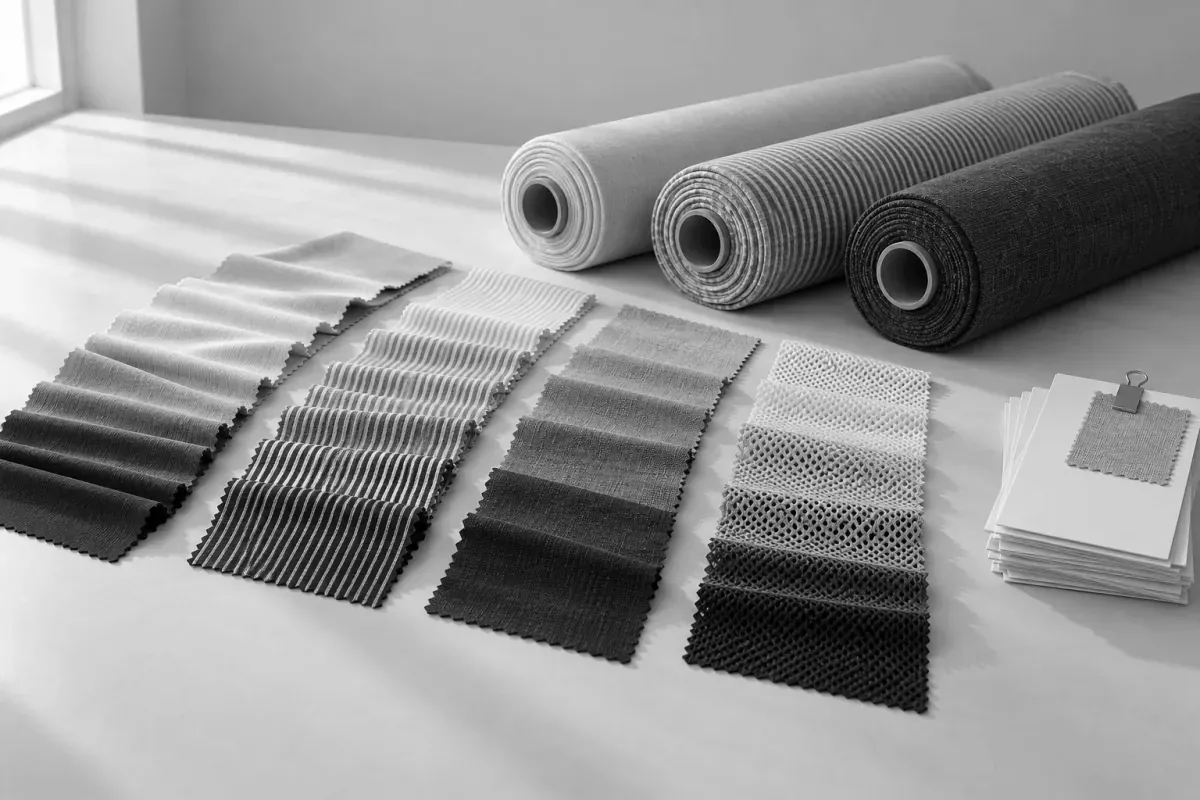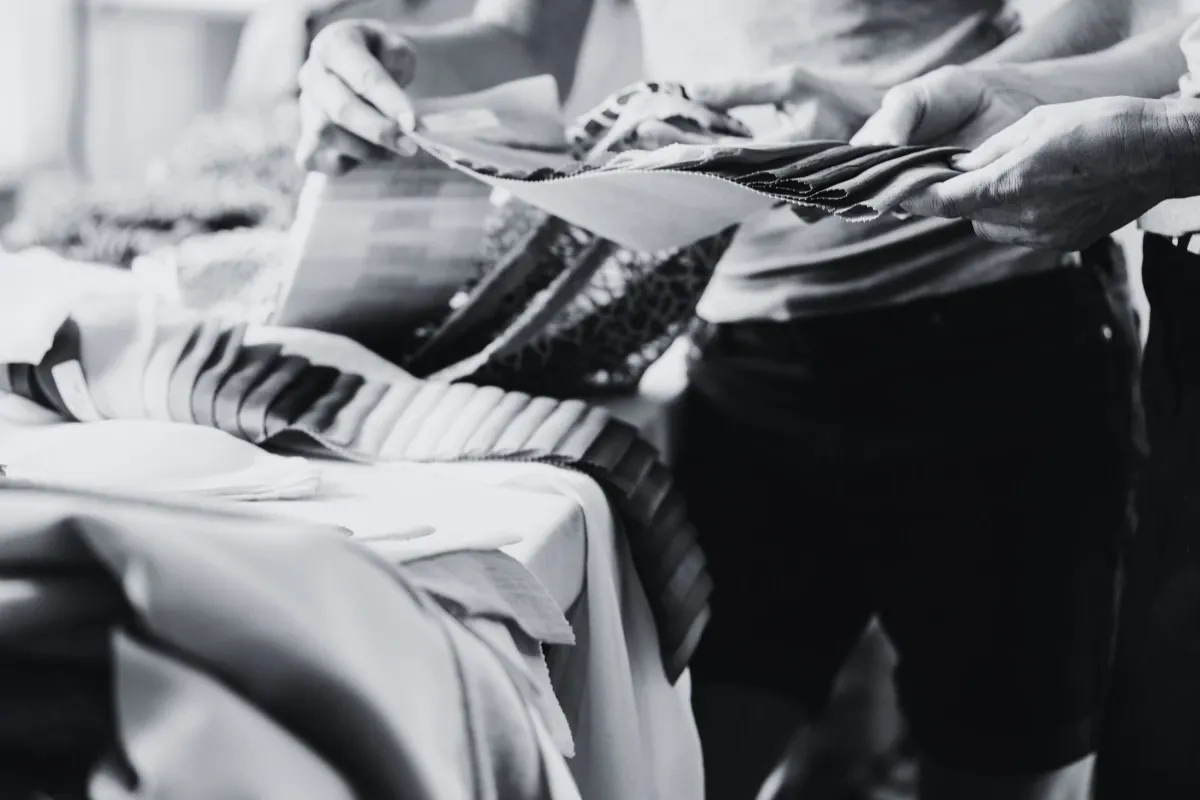
If you have ever pulled a sample polo out of a poly mailer, stretched the collar, and felt it stay stretched, you already understand the problem this guide solves. Performance apparel lives or dies on the fabric, and sourcing technical fabric is a fundamentally different exercise than sourcing the cotton jersey for a basic tee.
Generic cut-and-sew factories will happily tell you they make “premium” polos and leggings. Far fewer can explain why a specific four-fiber knit holds its shape after thirty washes, or why the moisture-wicking finish you approved in the sample washed out by the third cycle. This guide walks through what actually matters when you source performance and technical fabrics for activewear and golf apparel, the specifications to lock down before you commit to a production run, and how to avoid the failure modes that quietly sink small brands.
This is a companion to our broader fabric sourcing guide, which covers the fundamentals that apply to any clothing line. Here we go deep on the technical side.
Quick answer: what makes performance fabric sourcing different?
Performance fabric sourcing differs from standard fabric sourcing in four ways. First, the fabric is usually engineered rather than picked off a shelf, so you are specifying fiber blends, stretch, and finishes rather than choosing an existing material. Second, performance fabrics carry measurable technical requirements such as four-way stretch recovery, moisture management, and UV protection that have to be verified through testing, not eyeballed. Third, your decoration method and your fabric have to be selected together, because the wrong pairing ruins the garment. Fourth, technical knits are concentrated in fewer countries and mills, which changes your minimum order quantities and lead times. Get those four things right and most of the common production disasters disappear.
What counts as a performance or technical fabric?
A performance fabric is any textile engineered to do a job beyond simply covering the body. In activewear and golf apparel, the jobs usually include some combination of the following.
Stretch and recovery. The fabric moves with the athlete and returns to shape. This is the single most common reason a garment fails: it stretches during wear and never recovers, leaving baggy knees on leggings or a gaping collar on a polo.
Moisture management. The fabric moves sweat away from the skin to the surface where it can evaporate. Often marketed as moisture-wicking, this is a function of both fiber choice and knit structure.
Temperature and UV protection. Golf and outdoor apparel in particular need sun protection, often expressed as a UPF rating, and sometimes yarns treated to reflect or manage heat.
Durability and colorfastness. Performance garments get washed constantly. The fabric, the print, and the seams all have to survive a full season.
Hand feel and drape. The premium positioning most scaling brands want depends on how the fabric feels in hand. This is subjective but real, and it is where cheap technical knits give themselves away.
Most performance fabrics are knits rather than wovens, because knits provide the stretch that athletic movement requires. The exceptions are technical outerwear and certain golf bottoms, which may use woven fabrics with mechanical stretch or spandex content.
The specifications you must lock down before production
The biggest avoidable mistake small brands make is approving a fabric on feel alone and discovering the problems in bulk. Before you commit, get the following on paper for every performance fabric.
Fiber content and blend ratio. A blend like 53 percent cotton, 23 percent viscose, 17 percent recycled polyester, and 7 percent spandex is not arbitrary. Each fiber does a job: cotton and viscose for hand feel, polyester for structure and moisture management, spandex for stretch. Small changes in the ratio change the entire garment. Lock the exact blend, not just “a cotton-poly blend.”
GSM (grams per square meter). This is the fabric weight and it drives both the feel and the cost. A lightweight summer polo might run 160 to 180 GSM while a substantial quarter-zip could be 280 GSM or more. Specifying GSM prevents a factory from quietly substituting a lighter, cheaper fabric.
Stretch percentage and recovery. Ask for both the stretch (how far it extends) and the recovery (how completely it returns). Four-way stretch means the fabric extends both horizontally and vertically, which matters for athletic fit.
Finishes and treatments. Moisture-wicking, anti-microbial, UV, and water-repellent finishes should be named and, ideally, tested. Some finishes are durable; others wash out. Confirm wash durability for any finish your marketing claims depend on.
Colorfastness and shrinkage. Both should be tested with a standard wash protocol. Shrinkage above a few percent will throw off your entire size grading.
When tech packs do not exist yet, a reference sample from a competitor you admire can stand in. A capable sourcing partner can reverse-engineer fit and fabric from a physical garment, though it adds a sampling round.
Match the decoration method to the fabric
Decoration is where premium performance garments are most often ruined, because the right method depends entirely on the fabric underneath. The main options for activewear and golf apparel are:
- Sublimation bonds dye into polyester-rich fabrics and is ideal for all-over prints and bold, engineered graphics. It does not work on cotton-heavy blends.
- Screen print is cost-effective for simple graphics but can crack or feel heavy on stretch fabrics if the ink is not formulated for it.
- Flat embroidery gives a clean, classic look for logos but can pucker on lightweight technical knits without proper backing.
- 3D puff embroidery and 3D silicone create a raised, premium effect but need a fabric and placement that can support them.
- Appliqué layers fabric for a textured, heritage look common on premium golf pieces.
The rule is simple: choose fabric and decoration together, never in sequence. A gorgeous engineered print specified for a cotton blend that cannot take sublimation is a garment you cannot make.
Where performance fabrics actually come from
Technical knits are not evenly distributed around the globe. Sourcing decisions for performance apparel usually come down to a few regions, each with a clear strength.
China remains the default for technical performance knits at scale. The combination of synthetic fabric mills, trim availability, decoration capability, and decades of accumulated expertise is difficult to match, particularly for brands that need high quality at lower volumes. For most scaling activewear and golf brands, China is where the performance-fabric supply chain is deepest.
Peru is the standout for premium pima and supima cotton polos and for nearshore lead times to the US. It is less suited to highly technical synthetic pieces, where the local mill infrastructure is still developing.
South Korea specializes in high-end sublimation and technical rainwear, and is a strong choice when print quality and technical outerwear are the priority and the budget supports a higher price point.
The right answer is rarely a single country. A full golf or activewear collection often routes technical polos to one factory, premium cotton pieces to another, and outerwear to a third, each chosen by fabric and decoration requirements rather than by whichever quote came in lowest.
If you are weighing whether to move production between regions for tariff reasons, that decision deserves its own analysis beyond fabric capability alone.
How MOQs and lead times work for technical fabric
Because performance fabric is frequently engineered rather than stocked, minimum order quantities and lead times behave differently than they do for basic apparel.
MOQs for custom technical knits typically start around 100 units per colorway at the most flexible factories and climb from there, especially in regions outside China where local material sourcing is harder. If your fabric requires a custom knit or a custom dye, the mill will often have its own minimum that sits underneath the factory’s garment MOQ. Combining colorways or consolidating styles onto a shared base fabric is the most reliable way to keep minimums manageable.
Lead times for performance apparel usually run 14 to 30 days for samples and 40 to 70 days for production, with fabric sourcing being the biggest variable. Locally available fabric moves fast; an imported or custom-developed fabric adds weeks. Budget two to three sample rounds for a technical garment, because fit and fabric almost never land perfectly on the first attempt.
A practical checklist for sourcing performance fabric
Use this as a pre-production gate. Do not place a bulk PO until you can check every box.
- Exact fiber blend ratio is documented, not approximated.
- GSM is specified for every fabric.
- Stretch and recovery percentages are confirmed, with four-way stretch verified where the fit requires it.
- Every performance finish (moisture, UV, anti-microbial) is named and wash-tested.
- Colorfastness and shrinkage are tested with a standard wash protocol.
- Decoration method is selected to match the fabric, not chosen afterward.
- The factory and country are matched to the fabric and decoration, not to the lowest quote.
- MOQs and mill minimums are understood for every custom fabric and colorway.
- Two to three sample rounds are built into the timeline.
- A golden sample is approved and retained as the production standard.
Common questions about performance fabric sourcing
**What is the difference between activewear fabric and regular fabric?**Activewear fabric is engineered for movement and moisture management. It is usually a knit with spandex content for four-way stretch, often blended with polyester for moisture-wicking and durability, and frequently treated with performance finishes. Regular apparel fabric prioritizes hand feel and appearance over athletic performance.
**What is four-way stretch and do I need it?**Four-way stretch fabric extends both horizontally and vertically and recovers in both directions. You need it for fitted athletic garments like leggings, compression wear, and performance polos where the garment must move with the body. Looser or more structured pieces may only need two-way stretch or mechanical stretch in a woven.
**How do I make sure a moisture-wicking finish does not wash out?**Ask the mill whether the moisture management is inherent to the fiber and knit structure or applied as a topical finish. Inherent wicking lasts the life of the garment; topical finishes vary. Either way, require a wash-durability test before you rely on the claim in your marketing.
**Can I source performance fabric without tech packs?**Yes, though it adds time. A reference sample from a competitor garment you admire lets a capable sourcing partner reverse-engineer the fit and fabric. Expect an extra sample round compared to starting from a complete tech pack.
**Why are technical fabric MOQs higher than for basic apparel?**Custom technical knits are often engineered or custom-dyed rather than pulled from stock, so the mill imposes its own minimum to justify a production run. That mill minimum sits underneath the factory’s garment minimum, which is why consolidating colorways onto a shared base fabric helps keep your total commitment reasonable.
Bringing it together
Sourcing performance fabric well comes down to treating fabric as an engineered input rather than a shopping decision. Specify the blend, weight, stretch, and finishes precisely. Pair decoration to fabric from the start. Route each style to the country and factory equipped for its specific technical requirements. And build enough sample rounds into the calendar that you catch problems before they reach bulk.
That is exactly the work MakeMine handles for scaling activewear and golf brands. We develop custom performance fabrics as our default, match each style to the right factory across our network, and publish a line-item breakdown on every quote so you can see what you are paying for. If you want to see our full approach to the category, our golf apparel manufacturing page lays it out in detail.
Ready to develop the right fabric for your next collection? Get a free quote from our trusted factory network. There is no commitment and no fee required to get pricing.